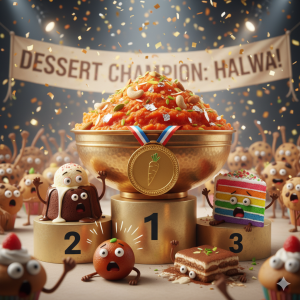
Food is more than flavor — it’s identity, memory, and movement. Every dish we eat carries whispers of where it came from: the soil, the people, the stories told over shared plates. Some recipes travel quietly, while others roar across continents, transforming and adapting with every border they cross.
Some places you visit.
Others — they haunt you, long after you’ve left.
Multan and Milan are like that — two cities carved by the same hands of hunger, faith, and craft, but separated by oceans of temperament.
One built from dust and devotion, the other from marble and discipline.
Both unforgettable. Both deeply cultured.
Multan — Where Heat Becomes Heritage
The first thing you notice about Multan isn’t what you see. It’s what you feel.
The air presses against your skin — thick, sun-stained, alive with the scent of and earth.
This is a city that doesn’t whisper its history; it exhales it.
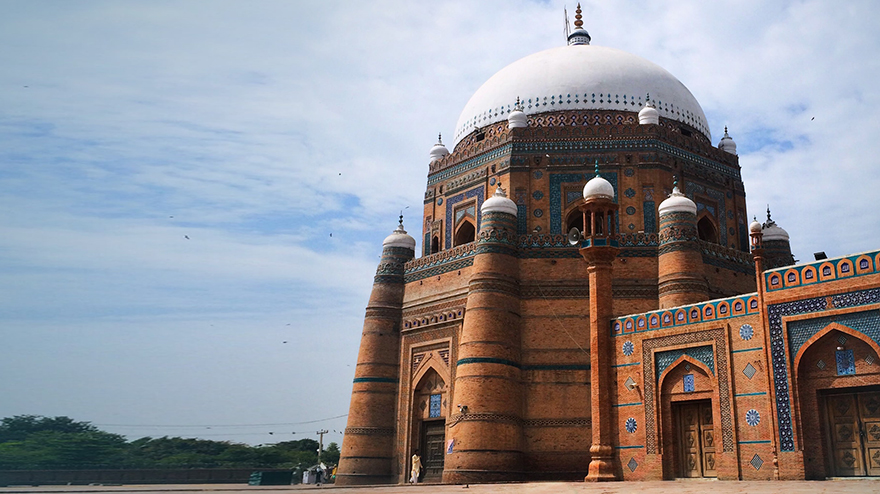
Known as Madīnat al-Awliyā — the City of Saints — its skyline is punctuated by domes glazed in cobalt blue, their symmetry echoing the balance of its people: half mystic, half merchant, wholly alive.
Every dome here tells a story.
At Shah Rukn-e-Alam’s shrine, blue tiles shimmer like trapped rivers.
You run your fingers over the glazed surface — centuries of craft, still warm from devotion.
Multan’s art doesn’t decorate; it worships.
And the food — God, the food.
Nothing here is light or careless.
The Sohan Halwa doesn’t melt; it lingers.
The karahi simmers until it earns your patience.
This is a city that cooks the way it prays: slowly, reverently, without apology.
They say the saints of Multan could bless grain to taste sweeter.
But maybe the truth is simpler: in this city, faith seasons everything.
“Multan: A city of saints and heat — too sacred to be conquered, too alive to be forgotten.” — Mughal-era record
In Multan, summer doesn’t arrive by calendar — it arrives by scent.
The mangoes — gold and perfumed — taste like nostalgia turned ripe.
The air thickens with sweetness long before dawn, and the city wakes to the perfume of ripening Chaunsa, Anwar Ratol, and Langra mangoes.
These aren’t mere fruits; they are rituals.
Each variety carries a temperament, a story, a memory.
The Chaunsa — golden, soft, a fragrance that feels like sunlight turning into syrup — was once the fruit of kings.
Legend says Emperor Sher Shah Suri named it after defeating Humayun in the Battle of Chausa, offering victory in sweetness.
The Anwar Ratol is the poet’s mango — smaller, richer, its flesh thick like honey, too fragile to travel far, loved by those who understand that beauty can bruise easily.
And Langra — green-skinned, bold, unapologetically tart — the local favorite that tastes of home more than luxury.
Multan’s mango is not just its pride. It is its portrait.
The season defines the city — the streets hum with mango festivals, trucks painted with prayers haul golden harvests through sunlit roads.
Milan — City of Design, Desire, and Discipline
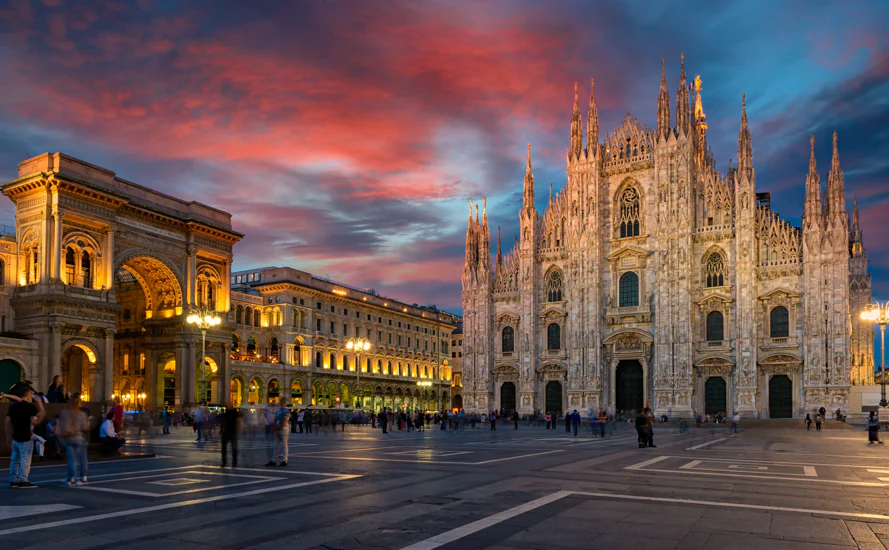
Founded by the Celts, reshaped by Romans, reborn through the Renaissance, Milan has always been a workshop of ideas. Here art isn’t something you observe. It’s a dialogue between eras.
Milan doesn’t just preserve culture; it designs it.
Food in Milan is choreography — deliberate, composed.
Risotto (a creamy Italian rice dish cooked with broth) glows like memory.
Ossobuco(tender bone marrow dish with a rich sauce ) melts with precision, not passion.
But look closer — it’s not cold.
There’s desire hiding beneath the structure, the kind that knows restraint makes everything sharper .
In Brera’s narrow streets, espresso cups click like punctuation marks in a language everyone seems to understand — style as instinct.
The Duomo (cathedral in milan) rises not as a building, but as a verdict: every spire, every shadow, reminding you that beauty here is engineered.
Even the wind feels designed.
This is where da Vinci painted patience, where chefs turn accident into art, and where luxury isn’t loud — it’s inevitable.
“Art is never finished, only abandoned.” — Leonardo da Vinci
Here, the table is a stage.
The espresso cup a ritual.
Every bite feels composed — art direction meets appetite.
Between the Two
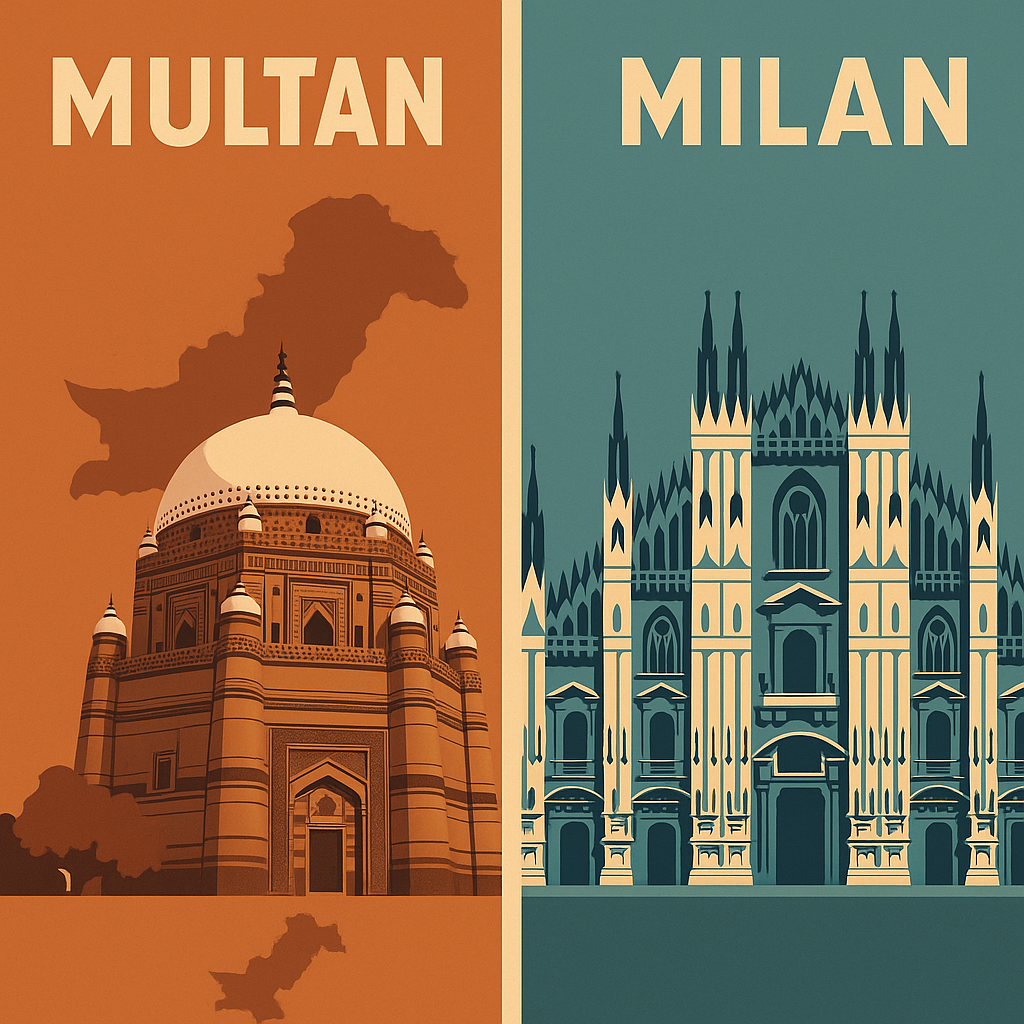
It’s easy to think they have nothing in common — one born of dust, the other of glass.
But beneath the surface, they share the same architecture: craft, devotion, continuity.
Multan’s artisans glaze tiles with the same intent Milan’s chefs stir risotto — not to impress, but to preserve.
When flavor travels, it doesn’t lose its origin.
It adapts, it translates.
Ghee learns to speak butter. Saffron learns to speak spice.
Echoes That Stay
Multan teaches you how to feel.
Milan teaches you how to refine.
One roughens your hands; the other steadies them.
Civilizations crumble. Recipes change. Languages fade.
But the impulse remains — to feed, to build, to love through making.
From Multan to Milan, every flavor, every face, every faith is just a variation of that same human story:
We were here. We made something that mattered.
“Some cities taste of fire, some of grace. These two taste of forever.”