
Let’s face it — we all love sugar. From that morning donut to the midnight chocolate bar, it’s everywhere, silently sneaking into our lives like a sweet little villain. But sometimes, our body says, “Enough!” — and that’s when diabetes enters the chat.
Diabetes mellitus, or simply diabetes, is a long-term condition where your blood sugar (glucose) levels are higher than they should be. Normally, insulin — a hormone made by your pancreas — acts like a key, unlocking your body’s cells so sugar can enter and give you energy. But when this key goes missing or stops working properly, sugar throws a tantrum and builds up in your blood. The result? Fatigue, thirst, endless bathroom visits, and a lifetime lesson in balance.
The Three Musketeers of Diabetes
Diabetes isn’t one-size-fits-all — it comes in three main types, each with its own personality.
1. Type 1 Diabetes:
This one’s the rebel. It usually strikes in childhood or adolescence when the body’s immune system attacks its own insulin-producing cells (because apparently, teamwork isn’t its thing). People with Type 1 diabetes have to take insulin daily to keep their blood sugar in check. It’s like carrying your own little “pancreas in a pen.”
2. Type 2 Diabetes:
This is the “modern life” version — born out of fast food, stress, and sitting too long. It usually happens when the body stops responding to insulin properly (insulin resistance). Over time, your pancreas gets exhausted trying to keep up. Type 2 diabetes is often seen in adults but is now crashing teenage parties too, thanks to sugary drinks and screen time.
3. Gestational Diabetes:
This one pops up during pregnancy, like an uninvited guest. It usually goes away after childbirth but leaves behind a note saying, “I’ll be back if you’re not careful!” Women who’ve had gestational diabetes are more likely to develop Type 2 later in life.
Why Does Diabetes Happen?
There’s no single villain here — it’s more like a gang. Genetics is the quiet mastermind ( the real culprit) ; if your parents or siblings have diabetes, your risk increases. But lifestyle plays the biggest role. Think about how we live today: breakfast skipped, lunch eaten in a rush, and dinner at midnight while binge-watching Netflix. Add sugary snacks and zero movement, and you’ve basically sent diabetes a personal invitation.
Stress also stirs the pot — your body releases hormones that raise blood sugar levels. Lack of sleep? That too. It’s like giving your pancreas a sleepless night and then asking it to perform miracles.
Signs You Might Be Hosting Diabetes
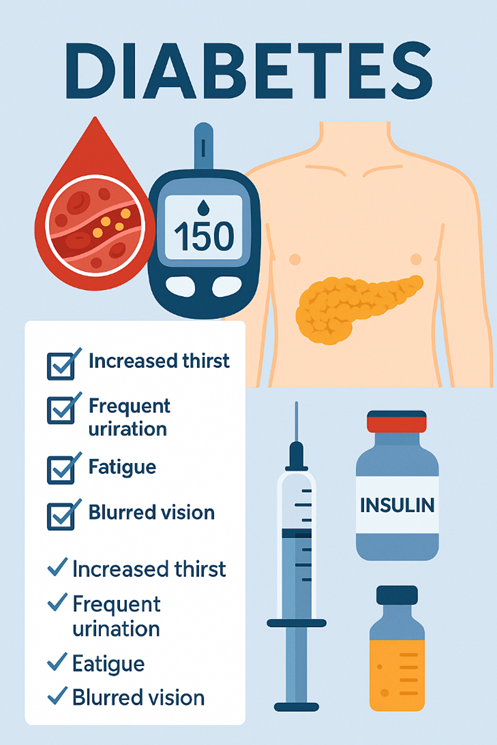
Diabetes doesn’t always knock loudly. Sometimes it whispers. You might feel thirsty all the time, need frequent bathroom breaks, or get tired even after a good night’s sleep. Cuts heal slower, vision goes blurry, and you might even lose weight without trying (which sounds good until you realize why).
A classic story: Ravi, a 35-year-old office worker, thought his constant thirst was just the summer heat. A few weeks later, he was shocked to learn his blood sugar was through the roof. The moral? Don’t ignore your body’s “pop-up warnings.”
Myths and Misconceptions: Busted!
Let’s clear the air — diabetes is surrounded by myths thicker than a chocolate milkshake.
- Myth 1: “Only overweight people get diabetes.” — False! Slim people can have it too, especially if they’re inactive or genetically prone.
- Myth 2: “Diabetics can’t eat sweets.” — Not true. You can enjoy sweets occasionally — just in moderation and with awareness.
- Myth 3: “Taking insulin means you’ve failed.” — Absolutely not. Insulin is not a punishment; it’s just a helping hand.
- Myth 4: “Diabetes is contagious.” — Nope! You can’t “catch” diabetes like a cold.
Complications: The Sugar Domino Effect
Uncontrolled diabetes is like letting a leak go unfixed — one small issue can create a flood. Over time, high blood sugar can damage blood vessels, nerves, kidneys, eyes, and even the heart. It can lead to problems like:
- Neuropathy: Tingling or numbness in your hands and feet.
- Retinopathy: Eye damage that can affect vision.
- Nephropathy: Kidney problems.
- Heart Disease: High sugar thickens arteries, increasing heart risk.
But before you panic — here’s the twist: most of these can be prevented with consistent care, regular check-ups, and smart lifestyle choices.
Diagnosis and Treatment: The Sugar Showdown
Doctors have a few simple tests to find out if your sugar’s acting up — Fasting Blood Sugar, Oral Glucose Tolerance Test, and HbA1c, which gives an average of your blood sugar over three months (like a report card for your pancreas).
Treatment depends on the type:
- Type 1: Insulin injections or pumps — no shortcuts here.
- Type 2: A mix of lifestyle changes, oral medication, and sometimes insulin.
But here’s the kicker — your lifestyle is the real game-changer. Regular exercise, balanced meals, less processed junk, and a consistent sleep schedule can do wonders. Even a brisk 30-minute walk every day can lower your sugar and lift your mood.
Diagnosis: The Truth in Numbers
Testing for diabetes isn’t scary — it’s smart. Doctors usually recommend a Fasting Blood Sugar Test, Oral Glucose Tolerance Test (OGTT), or HbA1c test. The HbA1c test is like a 3-month report card for your sugar levels.
If your fasting blood sugar is above 126 mg/dL or your HbA1c is 6.5% or more, you’ve officially joined the diabetes club — but don’t panic! With the right plan, you can still live a long, energetic, and absolutely delicious life. Thanks to technology, managing diabetes is easier than ever. There are continuous glucose monitors (CGMs) that track sugar levels in real time, insulin pumps that deliver insulin automatically, and even smart apps that help you log meals, workouts, and readings. Scientists are also working on artificial pancreas systems and stem cell therapies that might one day offer a long-term cure. The future is bright — and possibly sugar-free!
Preventing Diabetes: One Habit at a Time
Diabetes prevention isn’t rocket science — it’s common sense. You don’t have to live like a monk or survive on kale smoothies. The trick is moderation. Eat smart, move daily, and get enough rest. Replace soda with water, chips with nuts, and scrolling with strolling.
For example, swap your butter-loaded paratha for a veggie omelet or trade that sugary latte for black coffee with a dash of cinnamon. You’ll be surprised how these tiny swaps add up. And no, you don’t have to ban sweets forever — just treat them like special guests, not daily visitors.
Living with Diabetes: The Sweet Life (Literally)
Living with diabetes isn’t about saying goodbye to all the good stuff; it’s about being smarter. You can still enjoy birthdays, travel, and desserts — just with balance. Many famous people like Tom Hanks, Nick Jonas, and Halle Berry manage diabetes and still live full, energetic lives. The secret? Discipline with a dash of humor.
So if you forget your insulin once, don’t panic — just learn, laugh, and do better next time. Managing diabetes is like managing a stubborn pet: patience, consistency, and a few treats along the way go a long way.
7-Day Diabetes-Friendly Lifestyle Plan
Here’s a realistic (and fun) plan to keep your sugar levels happy without feeling like you’re living in a hospital brochure:
| Day | Morning | Afternoon | Evening | Lifestyle Tips |
| Monday | Warm water with lemon, oats with nuts | Grilled chicken + veggies | Light walk after dinner | Start the week strong – no skipping breakfast! |
| Tuesday | Boiled eggs + brown toast | Lentil soup + salad | Yoga or stretching | Drink 8 glasses of water today. Your kidneys will thank you. |
| Wednesday | Smoothie with spinach, apple & chia | Fish or tofu + quinoa | Short evening walk | Avoid sugary drinks – yes, even “just one soda.” |
| Thursday | Greek yogurt + fruits | Chicken wrap + fruit | Dance or cycle | Take stairs instead of the elevator. Bonus cardio! |
| Friday | Omelet + green tea | Brown rice + dal | Evening stroll | Reward yourself with a small square of dark chocolate. |
| Saturday | Rice with veggies | Veg curry + whole wheat roti | Movie night + light snacks | Relax – stress raises sugar too! |
| Sunday | Pancakes (oatmeal base) + berries | Family lunch – eat mindfully | Walk in nature | Reflect on your week. Celebrate progress, not perfection. |
Mental Health and Diabetes: The Hidden Battle
Living with diabetes can feel like juggling flaming swords — you’re constantly thinking about food, medication, and numbers. That mental load can cause anxiety, frustration, or burnout. Many people secretly feel guilty for “messing up” their sugar levels. But here’s the truth — nobody’s perfect, and one bad day doesn’t ruin everything.
Talking to a counselor, joining a support group, or even sharing your journey online can help lighten that emotional burden. Remember, mental health and blood sugar are best friends — when one improves, so does the other.
Conclusion: Living Smart with Diabetes
Diabetes may be a lifelong condition, but it doesn’t have to control your life. With smart food choices, regular exercise, and a positive attitude, people with diabetes can live full, energetic, and happy lives. The key is awareness — understanding how your daily habits affect your health. Whether it’s saying no to that extra spoon of sugar or saying yes to an evening walk, every small choice adds up. After all, managing diabetes isn’t about giving up sweetness — it’s about finding it in a healthier way.